


This article mainly discusses the common challenges of two-wheeler tracking, remote control, and anti-theft management, and how IoT technology can help achieve real-time vehicle positioning, status monitoring, and intelligent management. It introduces OMNI M113-IOT, an embedded IoT terminal featuring 4G remote control, GPS real-time positioning, Bluetooth communication, vibration detection, and anti-theft alarm functions, designed for e-bikes, pedal-assisted vehicles, scooters, and other battery-powered vehicles.
Are You Facing These Two-Wheeler Tracking and Anti-Theft Challenges?
As electric bikes, pedal-assisted vehicles, scooters, and other two-wheelers become increasingly connected, fleet operators and vehicle manufacturers are looking for more than basic GPS tracking. They need to know where their vehicles are, detect abnormal movement, prevent theft, and manage vehicle status remotely.
This creates several common challenges for two-wheeler operators: How can vehicles be tracked in real time? How can abnormal movement be detected? Can vehicles be controlled remotely? And how can the vehicle communicate with both the cloud platform and mobile APP?
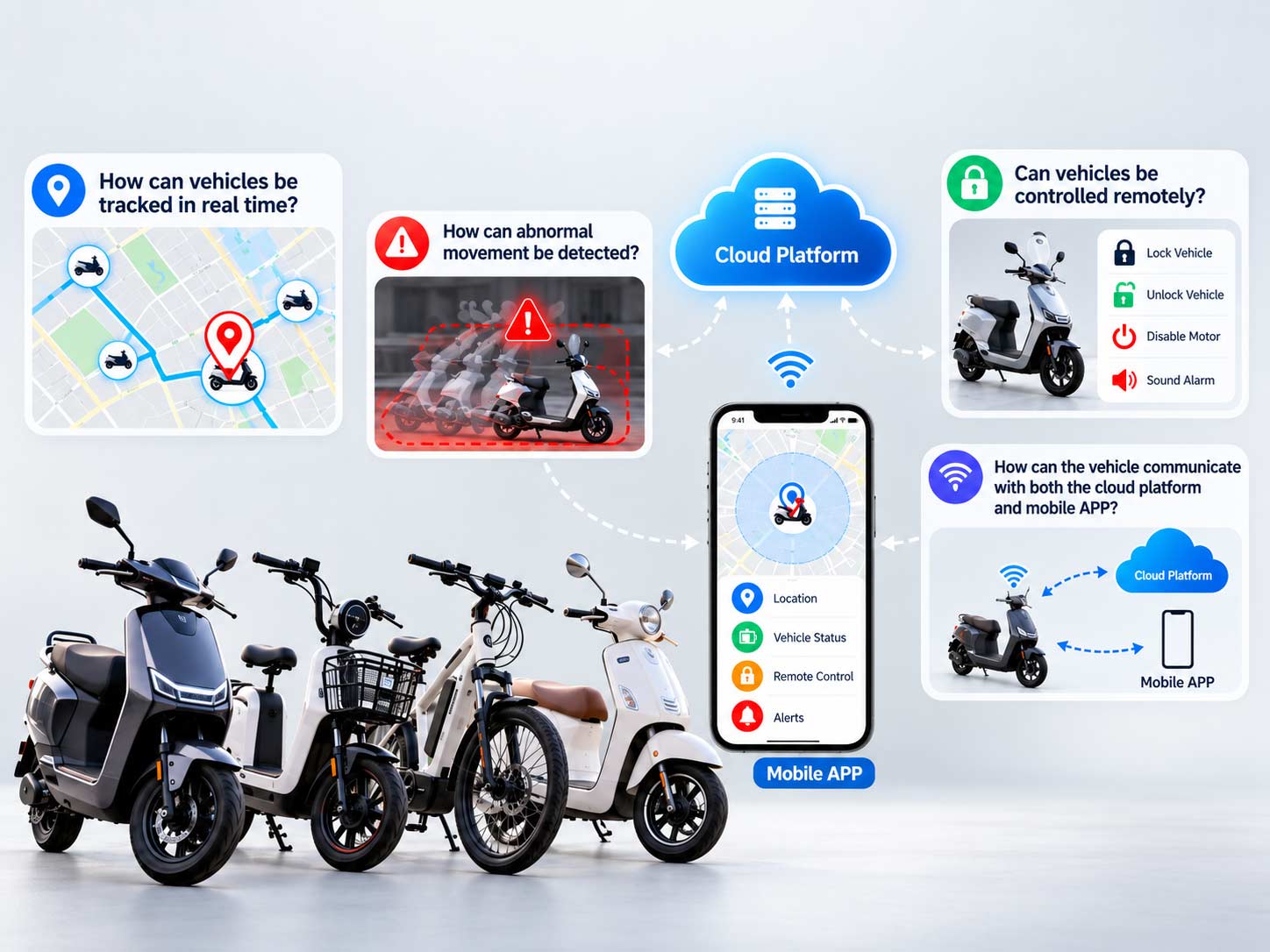
What Are the Common Challenges in Two-Wheeler Tracking?
1. Limited Visibility of Vehicle Location
For rental fleets, shared mobility operators, and personal electric vehicles, knowing the current vehicle location is essential. Without real-time positioning, operators may have difficulty locating vehicles, monitoring fleet distribution, checking vehicle usage, or responding to abnormal situations. GPS positioning provides the basic location data needed for real-time vehicle tracking and fleet management.
2. Difficulty Detecting Unauthorized Movement
Vehicle theft is another major concern for electric bikes, scooters, and other battery-powered vehicles. A vehicle may be moved without authorization even when the owner or operator is not nearby. For this reason, a tracking device with vibration detection and anti-theft alarm functions can provide an additional layer of vehicle security.
3. No Remote Vehicle Control
Traditional tracking devices mainly provide location information. However, connected mobility applications often require more than tracking. Operators may also need to remotely interact with the vehicle, check its status, and manage vehicle functions through a cloud platform. This is where an IoT-based remote control terminal can provide additional value.
How Does OMNI M113-IOT Support Two-Wheeler Tracking?
OMNI M113-IOT is an embedded IoT terminal designed for battery-powered vehicles, pedal-assisted vehicles, scooters, and similar applications. Rather than functioning as a standalone GPS tracker, M113-IOT integrates multiple communication, positioning, sensing, and control functions into one vehicle IoT terminal.
1. GPS Real-Time Positioning
M113-IOT supports GPS real-time positioning, allowing vehicle location information to be collected and reported to the backend.
This can support applications such as:
- Real-time vehicle tracking
- Vehicle location monitoring
- Fleet management
- Historical location records
- Abnormal vehicle monitoring
For fleet operators, positioning data can become an important foundation for daily vehicle management.
2. 4G Remote Control and Data Communication
M113-IOT communicates with the backend through a 4G network. This enables the IoT terminal to exchange vehicle-related information with the cloud platform and support remote vehicle management.
The 4G connection can be used for:
Vehicle → IoT Terminal → Cloud Platform → APP / Management Backend
This architecture allows operators to connect vehicle hardware with their existing digital management systems.
3. Bluetooth Communication with Mobile APP
In addition to 4G communication, M113-IOT supports Bluetooth communication with a mobile APP. This provides a direct communication channel between the vehicle and the user's smartphone. The combination of 4G + Bluetooth allows different communication methods to be used according to the application scenario.
4. Vibration Detection and Anti-Theft Alarm
M113-IOT integrates vibration detection and anti-theft alarm functions. When abnormal vibration or movement occurs, the IoT terminal can detect the event and work with the vehicle management system to provide an anti-theft response.
This is particularly useful for:
- E-bike rental fleets
- Electric scooter fleets
- Shared mobility vehicles
- Personal electric vehicles
- Other battery-powered vehicles
The goal is to move from simply tracking a vehicle to monitoring vehicle security.
5. Supporting Smarter Two-Wheeler Fleet Management
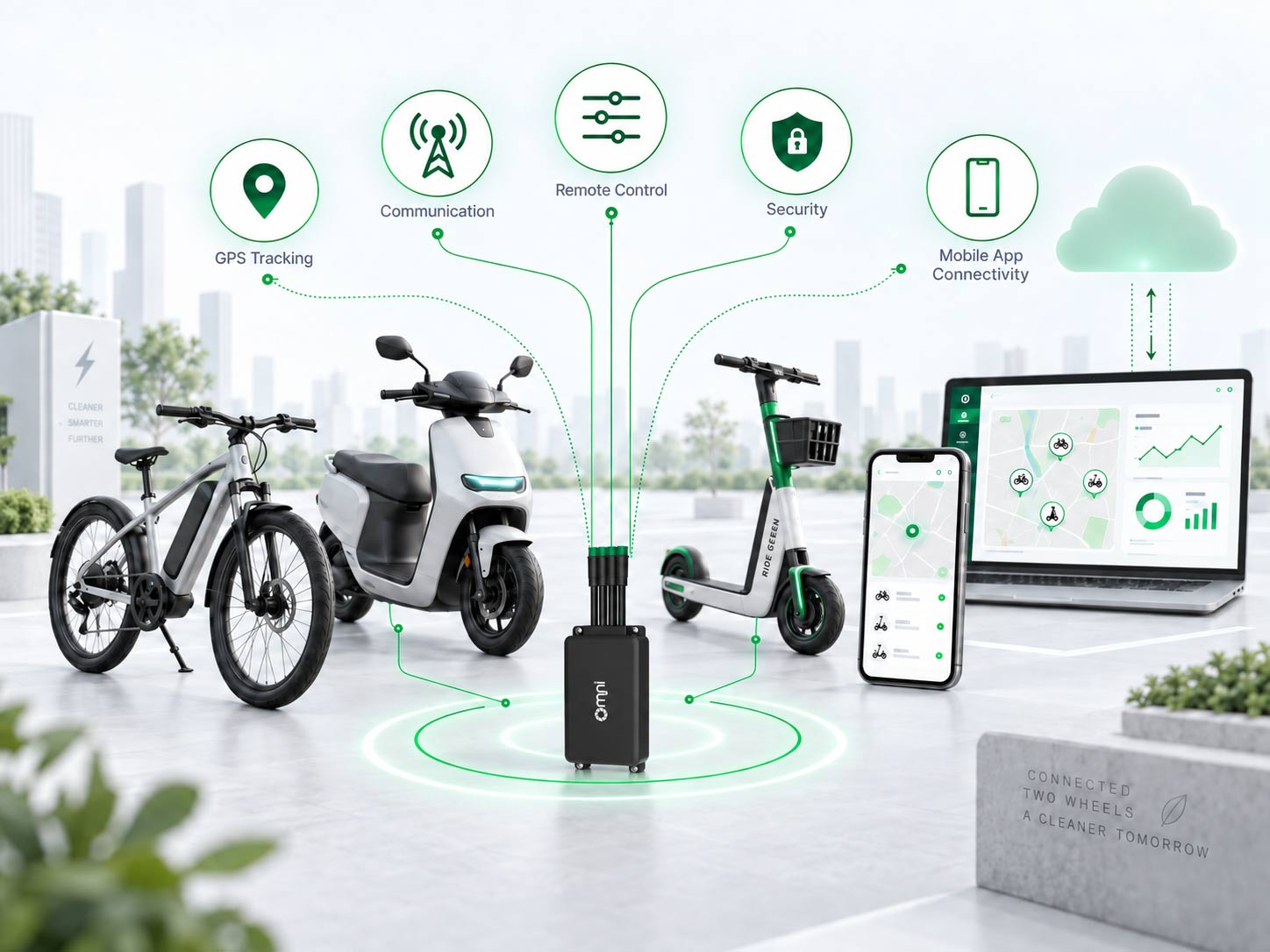
For B2B applications, vehicle tracking is only the first step. By connecting M113-IOT with a cloud platform and mobile APP, operators can build a more connected management system covering:
- Real-Time Tracking, Monitor vehicle location and movement.
- Remote Management, Interact with vehicles through the 4G network.
- Vehicle Security, Detect vibration and support anti-theft applications.
- APP Connectivity, Connect the vehicle with a mobile APP through Bluetooth.
- Status Reporting, Transmit vehicle-related information to the backend through the 4G network.
This makes the IoT terminal an important communication bridge between the vehicle, user, and cloud platform.
Where Can M113-IOT Be Used?
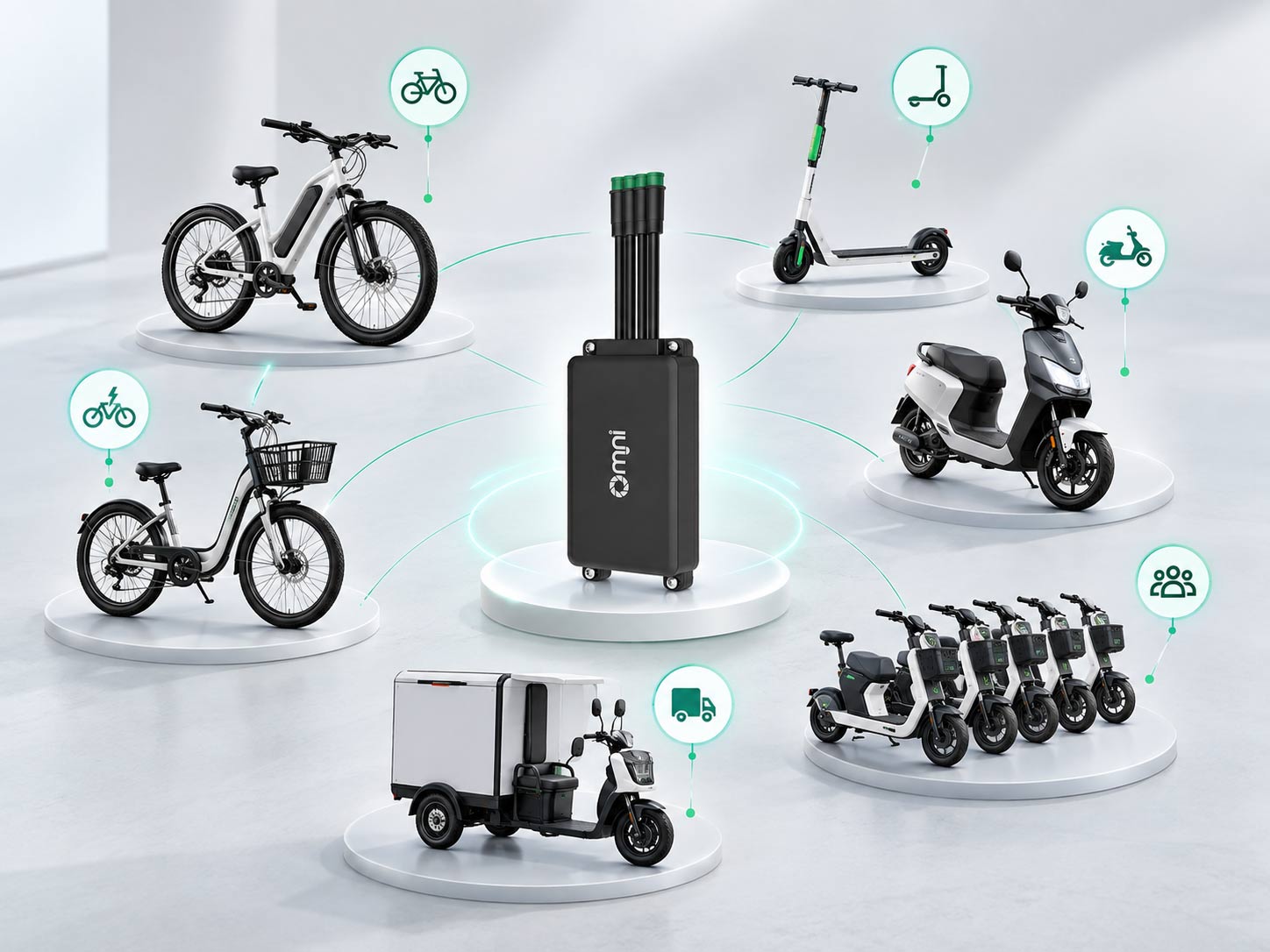
M113-IOT can be integrated into different battery-powered mobility applications, including:
- Electric bikes
- Pedal-assisted vehicles
- Electric scooters
- Rental two-wheelers
- Shared mobility vehicles
- Fleet vehicles
- Other connected battery-powered vehicles
For OEM and ODM projects, the IoT terminal can also be integrated according to the customer's vehicle architecture and project requirements.
From GPS Tracking to Connected Vehicle Management
The demand for two-wheeler tracking is moving beyond simply knowing where a vehicle is.
Modern operators increasingly need a combination of:
Tracking + Communication + Remote Control + Security + APP Connectivity
OMNI M113-IOT brings these functions together in an embedded IoT terminal, helping connect battery-powered vehicles with mobile applications and cloud-based management platforms. For companies developing connected e-bikes, scooters, rental fleets, and shared mobility projects, this approach provides a foundation for building more intelligent and connected two-wheeler applications.