


The main focus of this article is the key challenges of e-bike intelligence and how the M151 IoT addresses connectivity, real-time monitoring, security, and remote management through 4G, GPS, BLE, CAN Bus, and UART technologies.
As e-bikes and electric scooters become increasingly connected, users and fleet operators expect more than just reliable transportation. Real-time positioning, remote control, vehicle status monitoring, anti-theft protection, and seamless communication between different electronic components are becoming essential for modern smart mobility.
However, building a truly connected e-bike is not as simple as adding a GPS tracker. Different components—including the controller, display, BMS, sensors, and IoT device—need to communicate efficiently and work together as one intelligent system.
What Are the Key Challenges in E-Bike Intelligence?
1. Difficulties in Connecting Multiple Components
A modern e-bike may contain a controller, display, BMS, motor, sensors, and other electronic components. If these devices operate independently, it can be difficult for operators to obtain complete vehicle information or manage the system efficiently.
A smart IoT device needs to act as a communication bridge between different components, collecting data through interfaces such as CAN Bus or UART and transferring it to the cloud platform or mobile application.
2. Limited Visibility of Vehicle Status
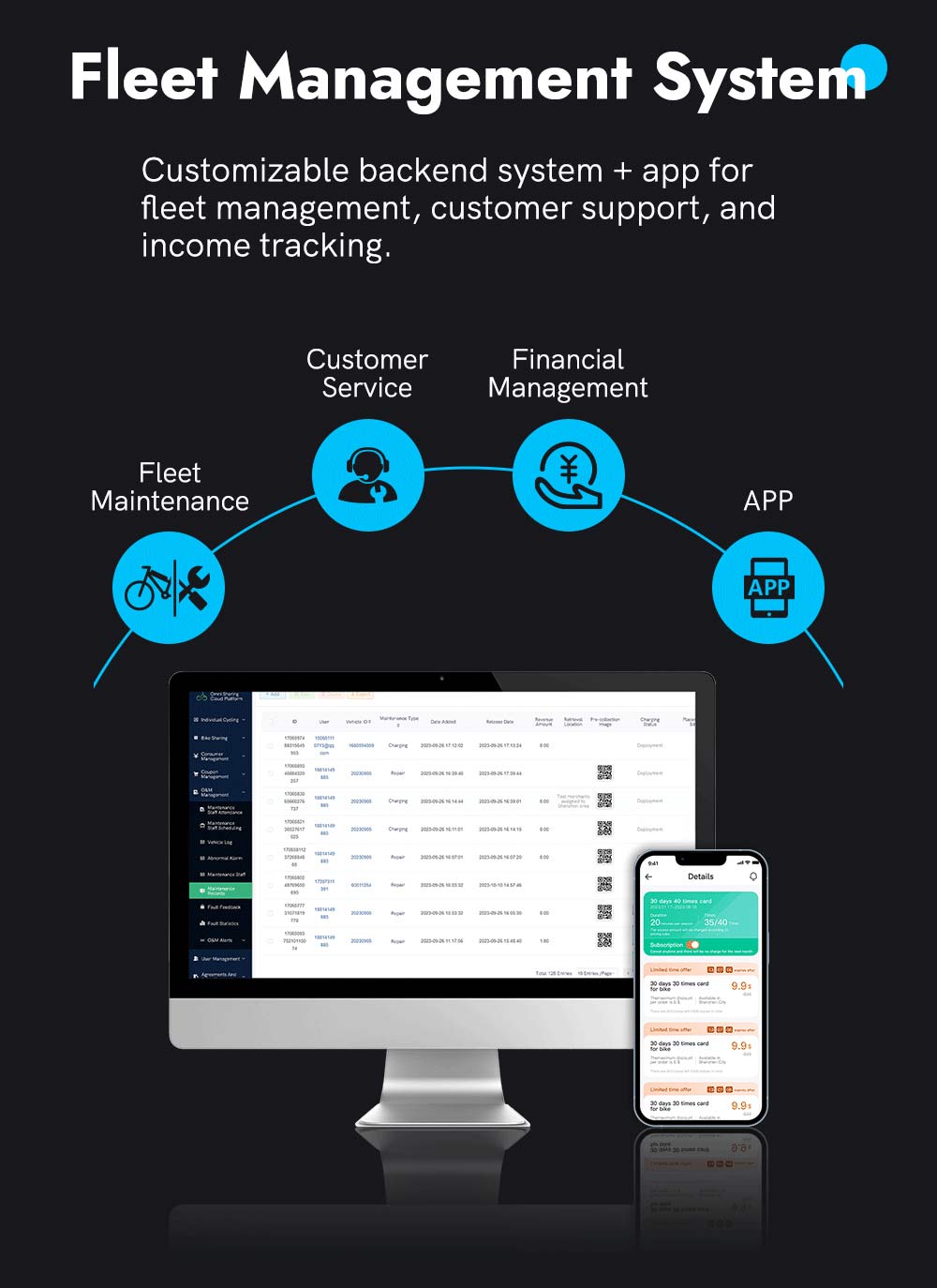
For shared e-bike, rental, and fleet operators, knowing where a vehicle is located is only part of the management process. They may also need to understand battery status, operating conditions, sensor information, and abnormal events in real time.
Without centralized data collection, operators may have difficulty monitoring vehicles remotely, identifying problems quickly, or improving fleet management efficiency.
3. Theft and Abnormal Events
E-bikes are valuable assets and can be exposed to theft, unauthorized movement, or other abnormal situations. Traditional locks and standalone tracking devices may provide limited protection.
A connected IoT system can combine GPS positioning, communication, and buzzer alarms to provide more proactive security. When abnormal activity occurs, the system can transmit relevant information to the platform and support timely intervention.
4. Different Communication Requirements
E-bike applications may require different communication technologies depending on the scenario. Cellular communication is useful for remote connectivity, Bluetooth is convenient for short-range interaction, while CAN Bus and UART are commonly used for communication between vehicle components.
Integrating these communication methods into one IoT device can help simplify the overall system architecture and improve connectivity.
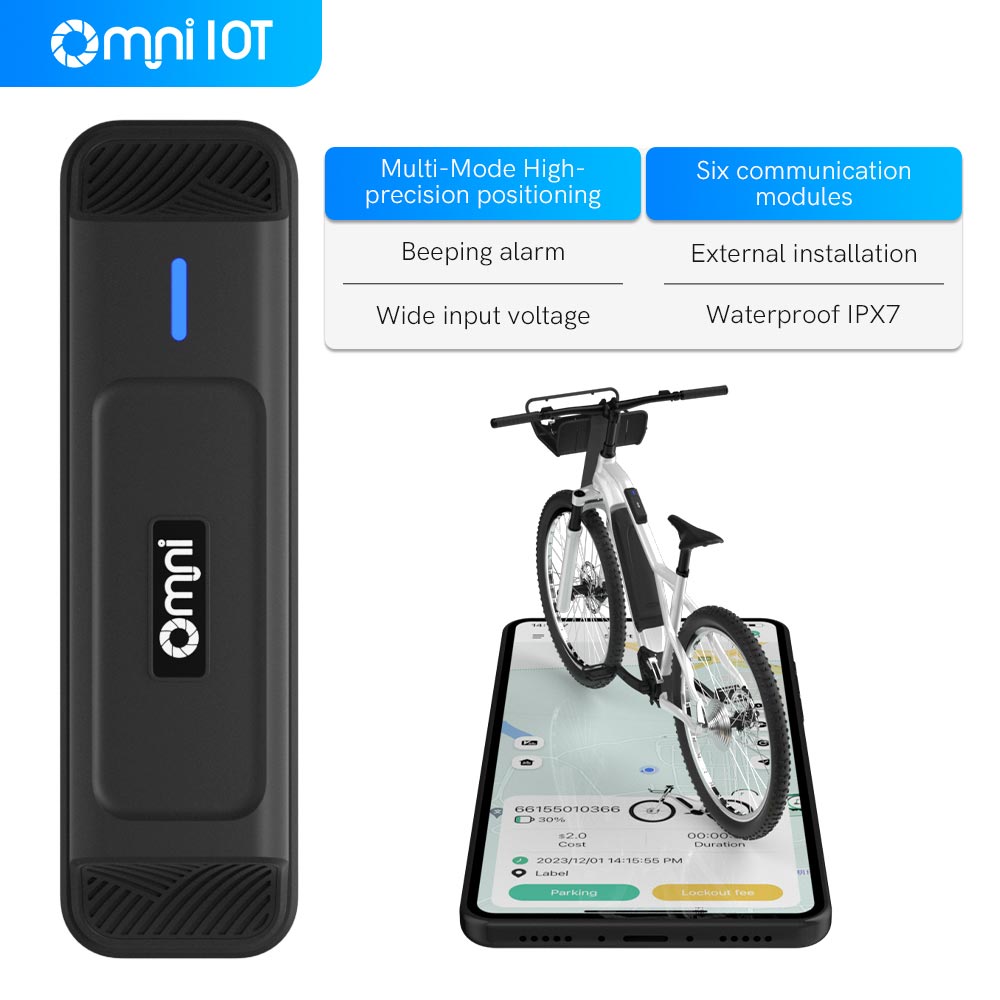
M151 IoT: A Smart Connectivity Hub for E-Bikes
The M151 IoT is designed as a surface-mounted IoT device for e-bikes and electric scooters. With integrated 4G communication, GPS positioning, BLE communication, CAN communication, a buzzer, and backup battery, it provides a centralized connection between the vehicle and the cloud platform.
The device can obtain information from the controller, display, BMS, and sensors through CAN Bus or UART, then transmit relevant data to an APP or cloud server through 4G or Bluetooth.
This enables manufacturers and fleet operators to build a more connected and manageable e-bike system without treating every electronic component as an isolated device.
Multi-Mode Connectivity for Flexible Applications
The M151 IoT supports multiple wireless communication options, including 4G LTE-Cat 1, CAT M1, CAT NB2, and EGPRS, providing flexibility for different markets and network environments.
Its BLE 5.2 communication capability can support local communication and interaction, while multi-mode and high-precision GPS positioning enables more reliable vehicle location information.
This combination makes the M151 suitable for applications such as shared e-bikes, rental fleets, smart electric scooters, and connected personal mobility vehicles.
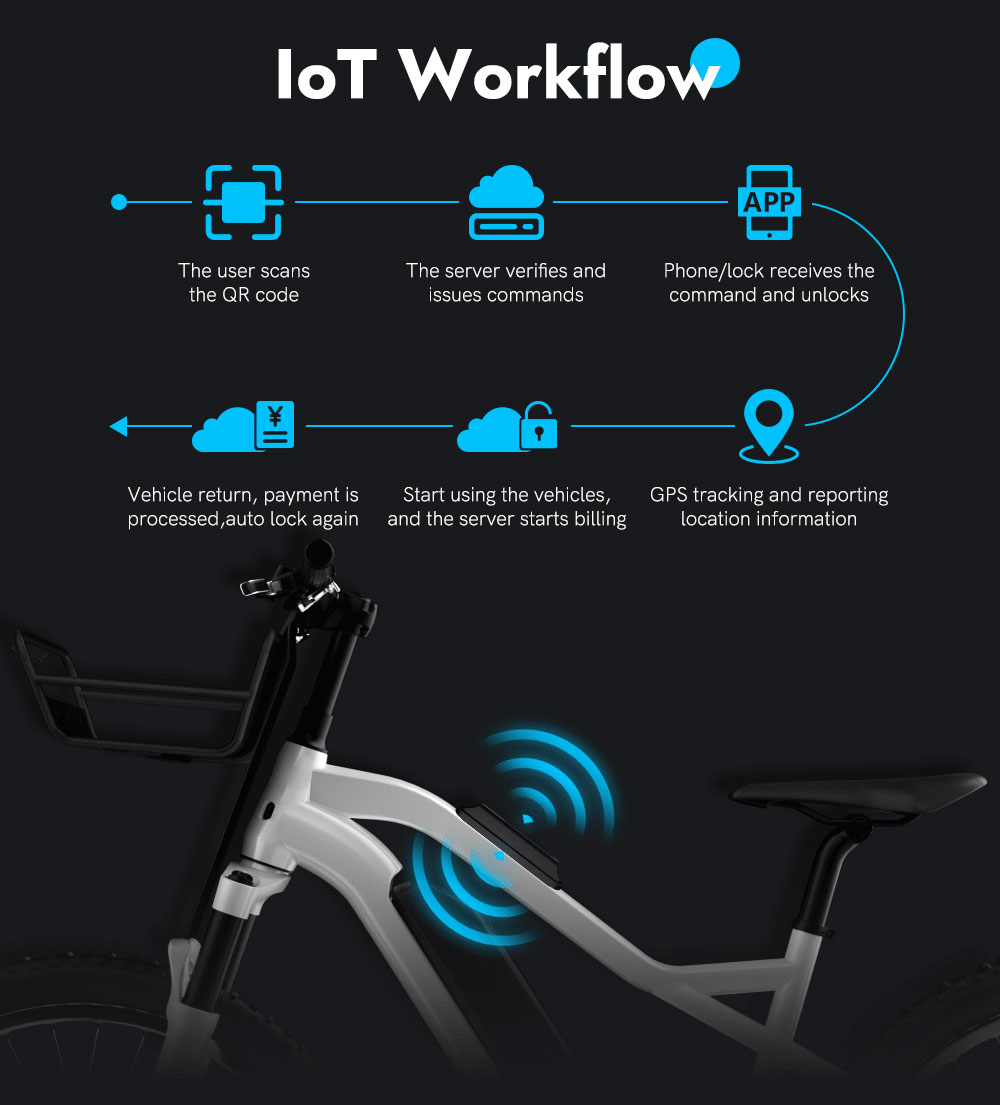
From Data Collection to Remote Management
The M151 IoT is more than a positioning device. By connecting with the vehicle's internal systems, it can collect information from multiple components and transfer it to the APP or cloud platform.
Depending on the system configuration, the APP or server can also send commands back to the vehicle, enabling remote management of supported functions.
This two-way communication helps transform an ordinary e-bike into a connected mobility platform where vehicle data, communication, positioning, and remote control work together.
Designed for Real-World E-Bike Applications
E-bikes are frequently exposed to rain, dust, vibration, and changing outdoor environments. The M151 IoT features an IPX7 waterproof design to support demanding operating conditions.
Its wide working voltage design provides greater compatibility with different vehicle electrical systems. The removable SIM card design also makes installation and maintenance more convenient for manufacturers and fleet operators.
With an external hanging design, the device can be integrated into different vehicle structures according to specific application requirements.
Building the Next Generation of Connected E-Bikes
As e-bike technology continues to evolve, intelligence is moving from individual components toward integrated vehicle systems. The ability to connect the controller, BMS, display, sensors, and cloud platform is becoming increasingly important for manufacturers and mobility operators.
By combining 4G connectivity, high-precision GPS, BLE 5.2, CAN Bus/UART communication, alarm functionality, and remote system interaction, the M151 IoT provides a practical connectivity solution for smarter e-bike and scooter applications.
For businesses looking to develop connected e-bikes, rental fleets, or smart mobility platforms, an integrated IoT architecture can help improve vehicle visibility, simplify data management, enhance security, and create a more connected riding experience.