


In today's society,two-wheeled vehicles are essential tools for many office workers.In daily life,we often see people riding bicycles,electric bikes,or scooters to commute.When traveling,if people find it inconvenient to ride their own bike or do not want to drive,after taking a bus or subway,for the last-mile distance,they can use rented or shared two-wheeled vehicles.What exactly enables two-wheeled vehicles to function in short-term sharing or long-term rental models?Now,let OMNI IOT explain in detail.
Regardless of short-term sharing or long-term rental,both fundamentally require a vehicle,an IoT-based smart bike lock,and power(for electric vehicles,cloud accounts are also included—these four components are tightly coupled in functionality yet can operate independently).
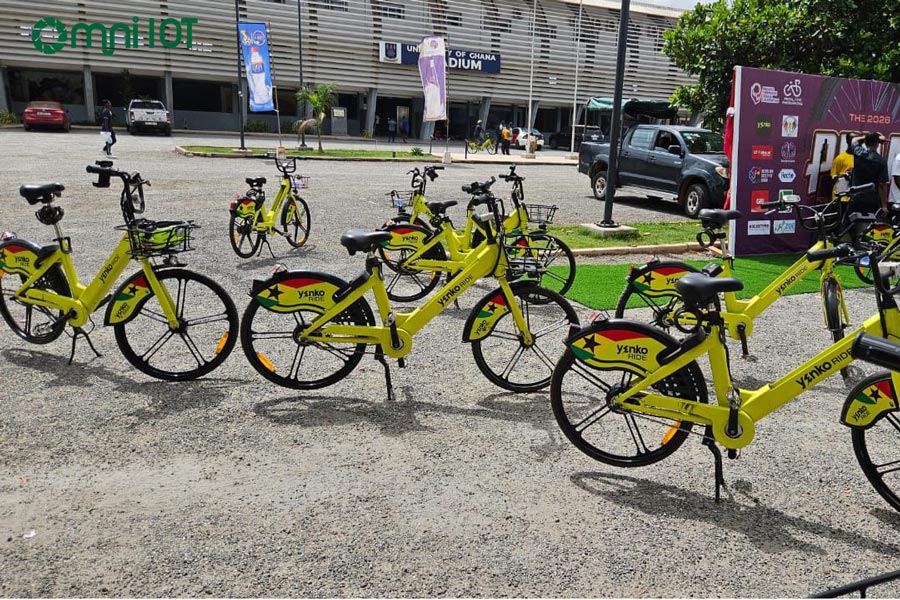
How does Two-wheeled Vehicle Become much more Intelligent?
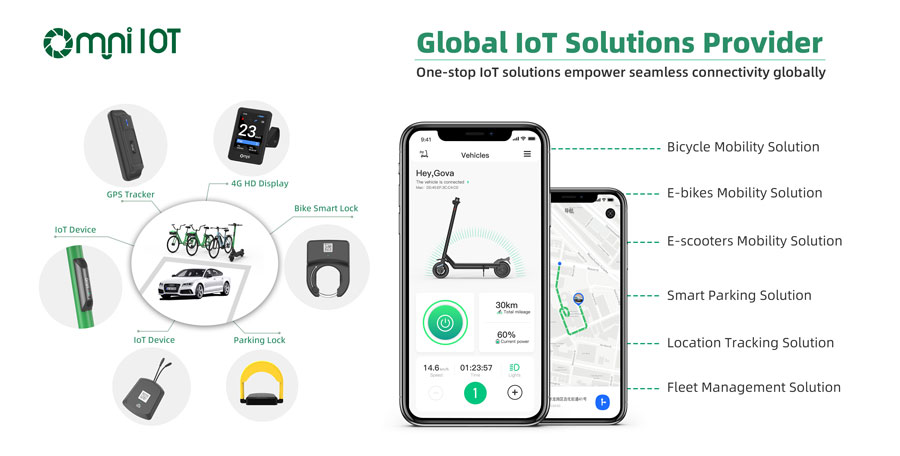
Whether it's a regular bicycle,an electric bike,a fat tire bike,or other models,how do they become so intelligent?The IoT-based smart bike lock acts as a“sensor”:installing the IoT-based smart bike lock is the most important step to transform an ordinary vehicle—just a frame with wheels—into a smart vehicle.It converts physical-world signals into electrical signals.
The IoT-based smart bike lock comes with Bluetooth,4G,and 5G modules,as well as an accelerometer,gyroscope,GPS,BeiDou,Glonass,Galileo,and other modules,plus current and voltage sensors,a Hall lock,and a vibration sensor.Integrating multi-mode satellite positioning,intelligent sensing,and power monitoring,this lock gives the vehicle 24/7 protection and precise perception capabilities.
The IoT-based smart bike lock also supports OTA upgrades.OTA upgrades allow remote updating of device firmware via wireless networks(4G/5G/WiFi/Bluetooth),without plugging in cables or disassembling the device.
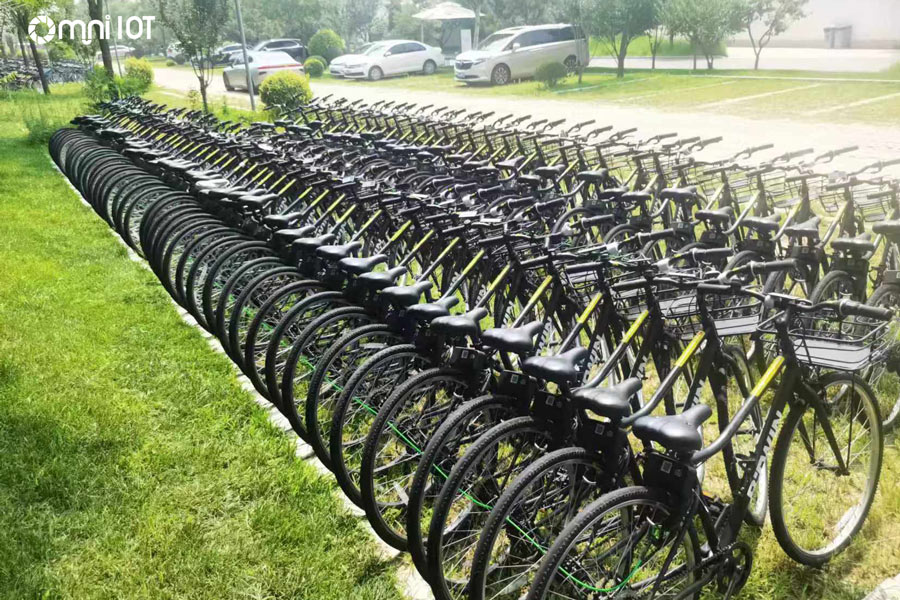
About the Smart Central Control(Including IoT-based Smart Bike Lock)+Interchangeable Core/Electronic Lock
In short-term sharing mode,the IoT-based smart bike lock is controlled by cloud commands.In long-term rental mode,the same vehicle can temporarily“switch”to a fixed password lock or a Bluetooth key bound to a dedicated user.A vehicle can switch rental modes in the backend at any time without hardware modification.
About the Battery Modularization
For electric bikes,shared mode uses battery swapping stations,while long-term rental mode uses home chargers+removable batteries.The vehicle itself remains the same;only the energy supply method differs.
Remotely Upgradeable Firmware
Shared platforms may require speed limits and electronic fences;when rented long-term to individuals,the speed limit can be remotely increased and fence alarms disabled.Software defines usage rights.
All the above are core enablers,forming a modular,manageable,plug-and-play system.
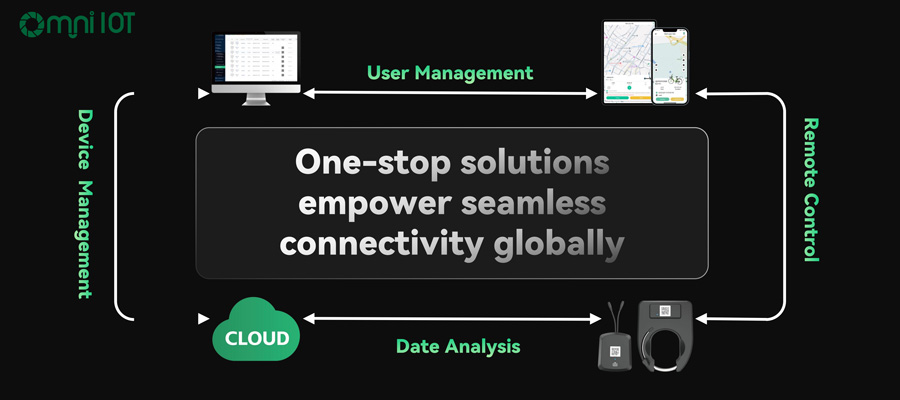
About the Cooperation Between Cloud and IoT-based Smart Bike Lock
The cloud and IoT-based smart bike lock communicate bidirectionally through IoT protocols(such as MQTT,CoAP,or HTTP/2),forming a typical device-cloud collaborative architecture.The cloud serves as the center for business logic and data processing,responsible for task scheduling,user authentication,order billing,geofence determination,firmware version management,and vehicle status tracking.The IoT-based smart bike lock acts as an edge execution node,with embedded firmware that collects real-time data such as lock status,battery voltage,vibration signals,and GPS/BeiDou positioning,and executes commands autonomously based on cloud instructions or local preset rules(e.g.,preventing unlocking with low battery,triggering alarms for abnormal vibration).
Under normal network conditions,the IoT-based smart bike lock periodically reports status via heartbeat packets,while the cloud sends commands for unlocking,locking,speed limits,upgrades,etc.When the network is interrupted,the bike lock relies on local firmware logic to maintain basic locking/unlocking functions and event logging.Once the network recovers,data synchronization is completed via message queues or resume mechanisms.
This architecture achieves decoupling of business logic and hardware execution:the cloud can complete billing and scheduling without relying on real-time hardware feedback,and the IoT-based smart bike lock can ensure safety and basic usability without the cloud.This simultaneously meets the high-frequency,real-time interaction needs of short-term sharing and the low-frequency,reliable asset management needs of long-term rental.
References and Standards
1.“Device-cloud collaborative architecture”comes from international standards(ITU-T Y.4509),which defines the functional architecture of device-edge-cloud collaboration in IoT and smart cities.
2.“Local lock decision+network interruption handling mechanism”comes from patent CN207568343U.
3.“Decoupling business logic and hardware execution”is interpreted according to ISO standards,specifically ISO/IEC 30141,which defines edge-cloud collaborative interfaces and data governance frameworks,supporting decoupled cloud-device design.
4.“Device-edge-cloud continuum architecture”is cited from academic literature(Springer,2024),specifically Device-Edge-Cloud Continuum,detailing dynamic orchestration methods for distributed computing resources.
5.“MQTT/CoAP protocol features”are referenced from IoT platform documentation,specifically OneNET,detailing MQTT heartbeat,QoS mechanisms,and technical requirements for bike lock-cloud communication.
6. MQTT/CoAP standardization references are based on ETSI testing standards(ETSI TS 103 596/597 series),providing standardized testing bases for IoT communication protocols.